In brief
- Non-traditional trade marks – such as colours, scents, sounds, tastes, shapes and moving images – are increasingly recognised as a valuable tool for businesses to differentiate themselves in a crowded market.
- Whilst these marks are often challenging to register successfully, they can give a clear competitive advantage – stronger brand association, exclusive rights, and creative freedom.
- Recent case law has shed some light on the protection of non-traditional trade marks, and how to overcome some of the typical challenges.
An introduction to non-traditional trade marks
In 2024 Chelsea and England midfielder Cole Palmer took the unusual step of filing trade mark applications for his name, nickname "Cold Palmer", face, signature, and even a video clip of his 'shivering' goal celebration. All of the trade marks have now been accepted by the UK Intellectual Property Office (UKIPO) and the EU Intellectual Property Office (EUIPO) - other than his facial image application, which remains pending before the EUIPO. This may be due to objections based on lack of distinctiveness, or it may be on hold pending a forthcoming Grand Board of Appeal decision on registrability of face marks (which we discuss below).
Cole Palmer joins a growing list of well-known personalities looking to protect their personal branding through trade marks and testing the boundaries of what can be registered. More 'vanilla' non-traditional trade marks include applications for colours and shapes. Whilst these can also prove challenging to register, some examples of successful colour registrations include Tiffany Blue, Barbie Pink and Coca-Cola Red.
Even if a non-traditional mark can be accurately represented on the register, it must also be deemed distinctive enough to function as a trade mark. This can prove difficult in respect of particular types of marks such as short combinations of musical notes. In particular, the aspects to be protected must not be perceived as a functional element of the goods and services or a common or banal feature in the industry in question.
So, what can be learned from recent decisions on non-traditional marks that have – and have not – passed the criteria for registration?
Registration of a short transportation service jingle (Berliner Verkehrsbetriebe (BVG) v EUIPO (T-288/24))
Whilst historically it has been difficult for sound marks to demonstrate distinctive character, a recent decision may open the door for some change as to how such marks are assessed. The EU General Court delivered a significant judgment upholding the registrability of a two-second jingle (listen here) in connection with announcements as an EU trade mark for transport services.
BVG, Berlin's main public transport operator, filed an application to register its jingle as an EU trade mark in relation to transport; wrapping and packaging services; storage; and similar services. Both the EUIPO Examiner and Board of Appeal rejected the application under Article 7(1)(b) of the EU TM Regulation, finding the mark devoid of distinctive character. The Board concluded the melody was too banal and short for consumers to recognise it as indicating commercial origin, perceiving it instead as a functional element to draw attention to announcements.
The General Court annulled the Board's decision, finding its assessment incorrect on several grounds. First, the court emphasised that sound marks are assessed using the same criteria as other mark categories, and even minimal distinctive character can suffice for registration. The court noted that, in the passenger transport sector, sound marks are commonly used to create recognisable sound identities and identify commercial origin.
The court went on to find that the brevity and simplicity of the jingle actually enhanced its memorability rather than diminishing its distinctiveness, making it more effective at indicating commercial origin. It found the melody had no direct link to the services and was not dictated by technical considerations.
This decision represents a potentially significant shift in sound mark protection, suggesting that even very short jingles comprising just a few notes may possess inherent distinctiveness. We may now see more sound mark applications at the EUIPO, potentially reversing a trend of rejections, for example, in relation to the sound made by the opening of a drinks can, followed by silence and a fizzing sound (listen here) and Porsche's sound of its electric model Taycan (listen here).
Rubik's Cube shape marks found invalid (Spin Master Toys UK v EUIPO and Verdes Innovations SA (T-1170/23 to T-1173/23))
A product's shape may be registered as a trade mark, but must satisfy the same requirements as 'traditional' marks regarding distinctiveness. Shape marks face the additional challenge of overcoming objections that the shape is inherent to the nature or function of the product, necessary to achieve a technical result, or adds substantial value to the goods.
In a recent decision concerning the iconic design of the Rubik's Cube, the EU General Court has upheld the invalidation of four Rubik's Cube shape trade marks. The court determined that the cube's essential characteristics, its overall shape and grid structure, constitute features which are essential to achieve a technical result contrary to Article 7(1)(e)(ii) of the EU TM Regulation — specifically, that the cube shape facilitates axial rotation, a core function of the puzzle; and that the grid structure, formed by black lines dividing each face into smaller squares, enables independent movement of rows and columns. These features did not serve exclusively as indicators of commercial origin.
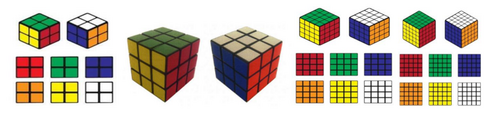
This decision serves as a reminder that trade mark law is not available to grant potentially perpetual monopolies over shape trade marks for functional characteristics, which are typically more appropriately protected by the temporal limitations of patent or design protection.
The registrability of a face as a trade mark (Johannes Hendricus Maria Smit v EUIPO (currently pending before the Grand Board of Appeal))
As highlighted above, celebrities have become brands in their own right, an increasing phenomenon in this digital age. From product endorsements to launching their own commercial ventures, the commercialisation of personal identity is highly profitable. Registering a trade mark for your name and/or image creates an additional IP asset and gives individuals control over how their identity is used (for example, to meet risks presented by AI).
The issue of registrability of an individual's image is currently before the EUIPO Grand Board of Appeal. Jan Smit, a Dutch singer, actor and television presenter, applied in 2015 to register the following image of his face as an EU trade mark:

Crucially, the image was a "natural" depiction of the real appearance of his face (not stylised or abstracted).
In December 2023, the EUIPO Examination Division rejected the application on two grounds:
- The mark lacked distinctive character under Article 7(1)(b) EU TM Regulation
- The mark was descriptive under Article 7(1)(c) EU TM Regulation
The examiner concluded that consumers would perceive a realistic facial image without stylisation as merely decorative or promotional, rather than as an indication of commercial origin.
Mr Smit appealed, citing inconsistent EUIPO practice (notably the acceptance of Dutch model Maartje Verhoef's photorealistic image as a trade mark), and argued that the mark had acquired distinctiveness through long-standing commercial use of his image on albums, promotional materials, merchandise and advertising campaigns.
The EUIPO Grand Board must address three central questions:
- Whether photorealistic faces are inherently distinctive
- Whether such images are merely descriptive
- The evidential standard for proving acquired distinctiveness through use.
The anticipated decision later this year is expected to be one of the most consequential recent decisions on non-traditional marks. It will determine whether the EU adopts a more permissive approach aligned with other jurisdictions or maintains a conservative stance prioritising legal certainty.
Comment
While non-traditional marks can provide powerful brand protection, they come with their own unique challenges, particularly regarding distinctiveness and how they are represented. Recent case law has demonstrated that while the bar is high for protection, if one can demonstrate that the mark functions as an indicator of origin rather than being simply functional or decorative, then securing a registration for a non-traditional mark can unlock huge commercial potential.