In brief
- Puma challenged the validity of a registered EU design for a pebble-like footwear sole owned by Sir Safety System SpA, based on a significant number of its earlier designs.
- The EU General Court dismissed Puma's challenge, reinforcing the 'overall impression' test as the relevant question in determining whether a design has individual character.
- In particular, the court concluded that, whether a design creates or follows a trend is not relevant when examining its individual character, and that novel features do not automatically confer broader protection on earlier designs.
- The court's decision highlights the difficulties brand owners can face in protecting distinctive design features and overall aesthetics.
Background
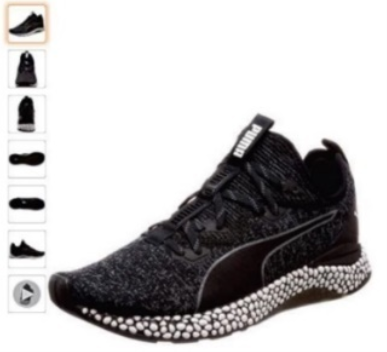
In 2022, Puma lodged an application at the EU Intellectual Property Office (EUIPO) to have a registered design in the name of Sir Safety System SpA invalidated based on lack of novelty and individual character due to Puma's earlier designs for its 'Hybrid' shoe series, which featured a distinctive pebble-like sole (Puma relied upon 30 of its design registrations).
 |
 |
| Puma's 'pebble like' sole, as seen on the 'Hybrid' series |
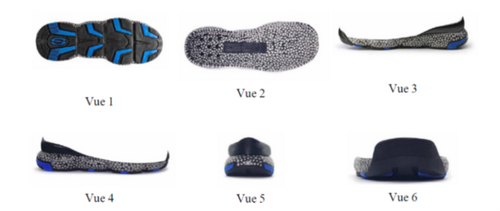
The contested design |
A registered design is considered to have individual character if the overall impression it creates on the informed user differs from the overall impression created by any earlier, publicly available design. In assessing individual character, the designer's degree of freedom in developing the design will be taken into account.
Puma claimed that a central feature of its earlier design was the pebble-like structure on the midsole, which it claimed was reproduced in Sir Safety's design. It stated that the contested design created the same overall impression on an informed user and therefore lacked individual character.
Both the EUIPO's Invalidity Division and, on Puma's appeal, the Board of Appeal, rejected Puma's challenge. Puma appealed to the EU General Court.
What did Puma appeal?
Puma argued that:
- The contested design lacked individual character, and the Board of Appeal had placed too much importance on minor differences to conclude that it created a different overall impression.
- In establishing a new market trend in the pebble-like structure of the midsole as part of the design of its 'Hybrid' shoe series, Puma had exhausted the designer's freedom. Therefore, differences between the designs had to be greater to establish there was a different overall impression on the informed user.
- Puma's prior designs enjoyed broader protection because it had created the pebble-like sole structure.
What did the General Court decide?
On 2 September 2026, the General Court dismissed Puma's appeal, concluding that, while the designs shared certain visual features in the pebble-like structure and thickness of the midsole, there were a number of differences in the undersole, the toe and heel, as well as in the distribution and arrangement of the particles of the midsoles. These differences gave the contested design a distinct overall impression which an informed user displaying a relatively high level of attention would notice.
To the extent that Puma had created a new design trend for shoes, this was relevant, at most, to the aesthetic perception of the design. The relevant question remained whether the overall impression on an informed user differed from that produced by prior designs. This aligns with the CJEU's approach in Deity Shoes.
The court concluded that Puma's degree of designer freedom was high as regards the shape, materials, colours and decorative elements of the pebble sole and its parts, and that this freedom extended beyond the mere use of a particle structure in the midsole. The court also found that any originality attributable to Puma's designs had no influence on the assessment of the individual character of the contested design. In any event, there was no evidence to support the claim that the pebble-like sole structure was completely new on the market when it was registered or disclosed, or that it had exhausted the designer's freedom by creating the sole structure. As a result, the court held that the differences between the designs did not need to be even ‘greater’ to create a different overall impression on the informed user.
The court reiterated that the 'informed user' is somewhere between an expert and an average consumer. While they are not a designer or technical expert, they know the various designs which exist in the sector concerned and show a relatively high level of attention when using them. The informed user was more sophisticated than an average consumer within the meaning of trade mark law, and could therefore make direct comparisons between the designs at issue, as well as be influenced by the practical use of the design (insofar as this allows them to determine the importance of certain visible features of the product).
What are the takeaways?
Overall, the court's decision highlights some potential challenges in protecting distinctive design features and overall aesthetics, as it is a breadth of features that will be used to determine the overall impression of a design on an informed user, not mere stylisation. In placing paramount importance on the overall impression test, the concern is that new designs may be registered that use trend-inspired features from earlier designs by simply adding new details to create a different overall impression in the eyes of a court.
Despite Puma owning a number of registrations for its pebble sole design in various iterations and designs, none of its 30 prior designs were found similar enough to create the same overall impression on an informed user. Designers should keep the overall impression test in mind when seeking protection, to ensure that they are strategically protecting their designs in the best possible way against infringement. For example, other intellectual property rights like copyright or trade marks, may become relevant in providing brand owners with that desired protection.
For more information on the decision and other design protection queries, please get in touch with our Copyright and Design team.