The COVID-19 global pandemic has meant millions of people have been at home looking for digital entertainment, and criminals have been quick to exploit the situation. With sport gradually returning to our screens this summer, illegal streaming is a growing concern for broadcasters. We believe many of the issues of illegal streaming are strategic, and that a high-level industry solution is needed to tackle it. The sports that bring together quicker digital delivery options, consumer friendly pricing and an enforcement strategy to highlight that this isn't a victimless crime, will be best placed to reduce revenue losses.
Internet Protocol Television (IPTV) is the streaming of television programming over an internet connection, in contrast to conventional cable or satellite signals. The technology has transformed the ways in which viewers consume legitimate broadcasting content over the last decade and now counts for a significant portion of user experiences. Illegal streaming is a growing issue, and is forecasted to lose the industry up to GBP 35 billion in the two years leading up to 2022.
However, where there is profit to be made, and especially where risks are perceived to be low, criminals will find a way of exploiting new technologies. A large and increasing pirate industry of illicit streaming products, services and technology has emerged which competes with legitimate service providers. Currently attitudes of some users of illicit services are ambivalent towards the damage they cause the industry. With the recommencing of sports events, such as the Premier League, broadcasters are increasing their focus on enforcement against illicit streamers to ensure they protect their businesses and customers.
Mishcon de Reya's MDR Cyber practice has acted for clients to investigate illegal streamers and work with legal teams to disrupt and privately prosecute offenders. Private prosecutions are increasingly used by rights holders as part of an enforcement strategy, meaning it is no longer just the police and other authorities investigating and prosecuting these crimes.
As part of these efforts, the team has examined the illegal IPTV ecosystem and has found a maturing "industry", which demonstrates characteristics such as division of labour, specialist roles and services and increasingly professionalised offerings and customer care. Furthermore, services typically offer attractive pricing models and customer experiences including the aggregation of content into single subscriptions and responsive customer support models. Premium sport channels are a mainstay of the industry and offered by nearly all pirate services.
The strategic issue
The problem and solution for illegal streaming are both strategic. Customers are using illegal streaming due to their price points, wide selection of streams in one place, and its ease of use.
Our research into the current IPTV landscape shows how some of the issues associated with illegal streaming are structural industry issues. The broadcast of sports has become more fragmented, which is likely to continue. We can see from the wider streaming media market that there is a creation of content silos, with consumers needing multiple subscriptions to watch everything that they once would have had in a single package or via terrestrial services. There is no immediate solution to this problem, and we are likely to see further fragmentation of consumer streaming before major providers become dominant.
One of the key drivers for illegal streaming also seems to be speed of service. It is possible to buy an illegal stream quickly, and to use it on most consumer devices. This advantage is being eroded by the introduction of easier to use subscription services from different broadcasters.
The damage caused
Use of illicit streaming is commonplace. In 2017 it was estimated that approximately 5 million people in the United Kingdom used illicit IPTV streaming services and that an additional 2.6 million people were expected to also start using these services “soon”. Meanwhile, around 830,000 illicit IPTV users reportedly cancelled at least one of their paid-for services in the twelve months preceding their purchase of IPTV, indicating that these services are actively displacing legitimate providers, rather than becoming a "nice to have".
It is no surprise that legitimate revenues lost to online piracy are forecast to almost double to GBP 35 billion between 2016 and 2022. This loss of revenue will impact the entire broadcasting chain – and not just broadcasters – threatening those also from within the industries of content creation, to advertising and even hardware manufacturing. For users, the impacts are less easy to articulate, and are often not felt directly by individual users. This may be in part the reason why ambivalence towards illegal services exists.
The illegal streaming ecosystem
Operating these services can be highly profitable. In one investigation, we identified a service with at least 75,000 social media followers and an estimated GBP 1.8 million annual revenue. In March 2019, Europol announced arrests against a gang believed to have made EUR 8 million from running IPTV services.
A reflection of this profitability is that the sale and distribution of illicit IPTV streaming has become an organised industry with specialist roles and support services. This separation of activities indicates a growing industry pursuing efficiencies to make greater profits.
We identified several specialised categories of roles in the illicit streaming market. The legal broadcasting value chain is where content is conceived, written, produced and delivered to end users. It is at the final stage of receipt by end legitimate customers where illicit streamers "hijack" this flow of content. IPTV pirates will pay for multiple subscriptions and then decrypt and divert this content, using technology to "multicast" streams of content to subscribers. While these roles are not always tightly separated (for example, diverting and reselling may be done by the same entity), these roles serve as a useful simplified model for understanding the flow of content from the legitimate broadcasting business to the customers of illegal services.
The illegal streaming ecosystem (see Figure 1) includes those services which are involved in the "core delivery" of the illegally broadcasted content – the diverters and resellers of the content. But significantly, there are also "key enabler" services: those that provide key infrastructure such as hosting space, those that provide payment services on which these services rely and those that provide hardware or software services such as modified streaming boxes, or apps which allow for the streaming of the content. Similarly, there are groups of people involved promoting illegal streaming online: those that run and administrate forums and groups for sharing knowledge, and those that promote services online through social media. Together, these services facilitate much of this crime and can be considered appropriate for enforcement action also.
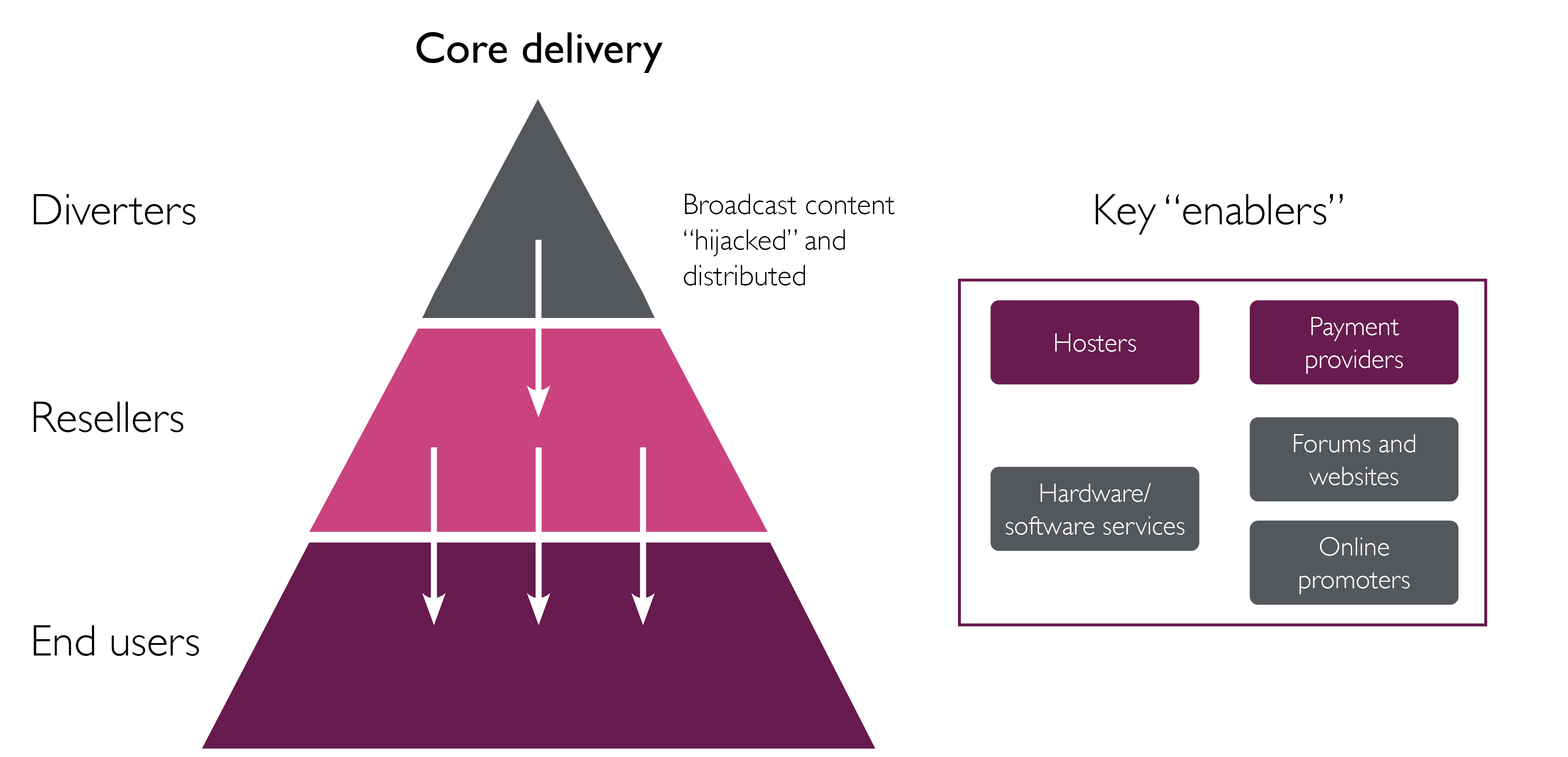
Figure 1 - The illegal streaming "ecosystem"
Enforcement opportunities
Enforcement also plays a critical role in combatting illicit streaming. Government, law-enforcement, industry bodies, legitimate customers, payment providers, social media platforms and broadcasters and content owners are all stakeholders in this issue with an interest and role to play. A strategic and joined-up approach to tackling these issues is critical to have the most impact.
To get the best "return on investment" of enforcement, stakeholders should seek to target "high-value" targets who are causing the most harm including those facilitating other illegal streaming.
Strategies should focus on increasing costs to the pirates, both in terms of their operations and the perceived risks of their activities as well as affecting the demand for illegal services.
Tackling illegal supply can be achieved through enforcement including public and private prosecution of service providers, but also targeted takedowns of services and marketing. The disruptive effect can decrease the quality of the customer experience, and increase operational costs to the providers.
Consumer demand for pirated content can also be affected through the deterrent of enforcement action as well as public education campaigns which focus on the risks of buying and using illegal services, the impact on the broadcasting and sports industry and which appeal to moral values. This can help change social norms which can have a powerful effect on consumer behaviour.
To find out more about more about how MDR Cyber and Mishcon de Reya are helping clients tackle illegal streaming in sport, please contact cyber@mishcon.com.